
Recommended reading
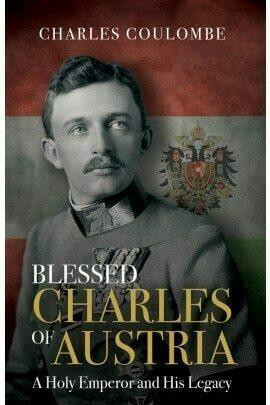
Charles A. Coulombe, Blessed Charles of Austria: A Holy Emperor and His Legacy, with a foreword by Archduke Karl von Habsburg (TAN Books, 2020).
Charles Coulombe’s life of the Emperor Karl makes the fullest case for his holiness yet put in English. It is learned and readable, written plainly out of affection for its subject, and it has done more than any other book to shape the way American Catholics think of him. I differ from it on a number of points, chiefly Karl’s conduct as a ruler and the uses since made of his memory, and the essay below sets out where and why. I recommend it all the same, and would sooner readers took up the argument with the book in hand.
I. The Question
Today, 21 October, is the feast of Blessed Karl of Austria. In parishes from Vienna to northern Virginia there will be Masses in his honour and prayers for his canonisation, and from more than one pulpit the last Habsburg emperor will be held up to Christian statesmen as the pattern of their calling. I write as an onlooker, standing outside the cult and with no stake in its fortunes, and since what an onlooker says on such a subject is apt to be taken either for impiety or for a republicanism I do not hold, it seems best to set out how the matter looks from where I stand.
The devotees are owed certain concessions at the outset, and I make them willingly. That the Holy See may beatify whom it judges fit I take for granted. Nor do I think Karl a bad man: the evidence of his private devotion is abundant and, so far as I can tell, honest; his marriage to Zita was by every account one of real affection; and he met his death at Funchal on 1 April 1922, at thirty-four, without money and far from home, with a resignation few of us could hope to equal. My own sympathies, besides, lie with constitutional monarchy, which is part of the reason the cult sits so uneasily with me.
My argument is a limited one. Beatification permits a devotion without making it obligatory, so that whether anyone takes part is left to private judgement, which is bound in its turn to follow the evidence; and that evidence lies as open to an onlooker as to a devotee. Having considered Karl’s conduct as a ruler, the history of his cause, and the purposes his memory is now made to serve, I find that the public veneration his cult invites asks more of the record than the record will bear.
II. What Beatification Asks of the Faithful
Since devotional writing on Karl tends to obscure it, the point of law must come first. Benedict XIV, whose De servorum Dei beatificatione et beatorum canonizatione remains the classical authority, drew a careful line between the two acts named in his title. Canonisation he regarded as a definitive sentence addressed to the universal Church, of the sort most theologians since have held to engage its infallibility. Beatification was for him a permissio, a concession of public cult restricted to determined places and determined forms.1 The modern formula keeps the distinction intact, the Pope granting the faculty to venerate the Blessed (facultatem facimus) without commanding anyone to use it.2
A beatification is therefore reformable, as the older canonists said without the least embarrassment, and the Congregation for the Causes of Saints effectively conceded as much in 2005, when Benedict XVI handed the rite back to the local churches precisely in order to underline how far it stands apart from canonisation.3 Nobody is under any obligation to join in the cult of a Blessed. A Catholic may accept that Rome acted within its competence on 3 October 2004, leave unused the permission it then gave, and remain in perfectly good standing.
I press the point only because Karl’s promoters so rarely concede it. In their literature canonisation tends to appear as a formality awaiting the requisite paperwork, and the critic is answered as though he had denied an article of faith, when all he has done is to exercise a liberty the Church has expressly left him. How that liberty ought to be used in Karl’s case is a question of fact, to be settled by looking at the record.
III. The Ruler at War
At the beatification John Paul II spoke of Karl as “the Christian statesman” and commended him to all who hold political responsibility in Europe.4 As the praise is directed at the ruler, one may fairly ask what use the ruler made of his power.
Karl succeeded Franz Joseph on 21 November 1916 and almost immediately took the supreme command of the Monarchy’s forces into his own hands.5 Once Conrad von Hötzendorf had been dismissed in March 1917 that command was exercised in fact as well as in name, and the historians of the Schönbrunn project conclude, reasonably enough, that the deaths of the war’s final two years lie at his door.6 I do not count this against him, since every wartime sovereign carries the same load, and a prince who inherits a war can hardly be said to forfeit his claim to holiness by prosecuting it.
The gas released at the Twelfth Isonzo in October 1917 is a less comfortable matter. German troops delivered it, and the Schönbrunn account takes care to say that Karl neither called for it nor pressed for it, but allowed it to go ahead on the footing that it was defensive;7 Robert Rill of the Austrian State Archives records, for his part, that critics then and since have blamed Karl for letting it go forward unchecked.8 I am prepared to believe his defenders when they tell me he disliked the weapon. Yet a sovereign who dislikes a method of war, has power to forbid it and permits it nonetheless, has made a choice, and while that choice may be defended under the pressures of that autumn I do not find in it the marks of heroic virtue. Nor was the point much softened by the portrait of Karl in field uniform that hung above St Peter’s Square on the day of his beatification.
On the Sixtus Affair I feel more strongly, because there the issue is truthfulness. In March 1917, using his brother-in-law Prince Sixtus of Bourbon-Parma as intermediary and keeping his Foreign Minister only partly informed, Karl promised in writing to support what he called France’s “just claims” to Alsace-Lorraine.9 With the object, which was peace, I have no quarrel. When Clemenceau made the letter public on 12 April 1918, however, Karl disowned it, and at Czernin’s prompting assured his German ally on his word of honour that the published text was false, going so far as to call genuine letters forgeries.10 Nothing his peace policy had aimed at survived the episode; compromised in Berlin’s eyes, the Monarchy spent the weeks that followed drawing still closer to Germany.
Some dissimulation is the common lot of statesmen, and diplomacy would be impossible without a degree of reserve. A solemn word of honour given to an ally in denial of a document one has oneself signed belongs to another category, being a lie told in self-protection, and one whose consequences fell heavily on the peoples committed to Karl’s care. Anyone who proposes him to European politicians as a model ought to give some account of it, and in the devotional literature I have read I have found none.
IV. The Ruler after the Fall
After 1918 the pattern repeats itself, this time without the excuse of war. On 11 November of that year, on the advice of Ignaz Seipel and Cardinal Piffl, Karl withdrew from all participation in affairs of state, while declining to abdicate.11
Legitimists have built a good deal on the distinction between renunciation and abdication, and as a matter of constitutional law I grant that the distinction is a real one. I am troubled rather by the use Karl made of it. Leaving Austria for Switzerland in March 1919, he revoked the Eckartsau declaration by the Feldkirch manifesto, to which the Austrian parliament responded with the Habsburg Law of 3 April 1919.
Switzerland admitted the family subject to conditions. Karl was to live at a distance from the Austrian border and keep out of politics, and when his permit came up for renewal it was prolonged on the strength of his personal assurance that he would attempt nothing of the kind without leave.12 My source here is a foundation devoted to his son’s memory, which can scarcely be accused of malice.
He made two attempts in 1921 to recover the crown of Hungary. The first, at Easter, saw him cross the frontier in secret, in the teeth of warnings from friends better acquainted with Hungarian conditions than he was, only to find that Horthy would not yield.13 In October he tried again, flying in from Switzerland with the Empress, setting up a provisional government, collecting legitimist officers and irregulars, and moving on Budapest by rail, until on 23 October government forces barred his way at Budaörs. Rill puts the dead left on that field at nineteen, after which Karl agreed to treat and gave the order to lay down arms.14 By then the neighbouring states had threatened to intervene, and the Allied powers resolved that he could no longer be suffered to remain in Europe.15
His defenders answer that Karl was the crowned King of Hungary, that Horthy had never been released from his oath, and that a lawful sovereign may recover what belongs to him. The constitutional argument has more in it than its critics usually allow, and I do not wave it aside, though it does not reach the moral question. Karl went back on his word to the country that had sheltered him and embarked on an armed venture with poor prospects, in a land already worn out by war, revolution and partition, over the objections of his own supporters and under foreign threats that put Hungary’s very existence at hazard, and men lost their lives as a result. That he called a halt before more blood was spilt is to his credit, though to my mind it does not excuse his having set out at all, and the enterprise as a whole showed scant regard for prudence, in a prince whose office required it of him above most things.
V. The Process and the Miracle
I have no reason to question the good faith of those who conducted Karl’s cause, though certain features of its history persuade me that its outcome ought not to be treated as closing the question.
The movement began very soon after his death. In the early 1920s Wilhelm Miklas, a Christian Social politician later to become President of the Republic, set about promoting a beatification, and by 1925 the Archdiocese of Vienna had begun to take evidence.16 The cause was opened formally in 1949, and the positio laid before the Congregation in 1995 ran to about 2,650 pages;17 heroic virtue was declared in 2002.18 At every stage the chief promoter was a prayer league closely bound to the dynasty and its adherents.19 I make no complaint of that, since every cause needs its advocates, but it does mean that the evidence was assembled by people who already knew the conclusion they hoped to reach.
The miracle approved for the beatification concerned Sister Maria Zita Gradowska, a Polish Sister of Charity in Brazil, whose chronic venous ulcers were healed in 1960 after she sought Karl’s intercession; the decree was signed on 20 December 2003.20 Whether a miracle took place lies beyond my competence to decide. I note merely that the complaint was long-standing and inclined to recur, that the decree followed the event by more than forty years and Sister Maria Zita’s own death in 1989 by fourteen, and that the healing drew open mockery in the press at the time of the beatification.21 A man need not be a scoffer to suspect that a cure of this kind will not bear the evidential load the procedure lays upon it.
The beatification also belongs to a pontificate of unexampled productivity, in which John Paul II raised 1,338 persons to the rank of Blessed and 482 to that of Saint, a tally no four centuries before him could match.22 The same Schönbrunn historians observe that the sway of the Austrian Church’s ultra-conservative wing over Karl’s cause, and that of Bishop Kurt Krenn of St Pölten above all, attracted public censure when the ceremony took place.23 I do not suggest that any of this touches the validity of the act, only that the act was not made in a vacuum and ought not to be read as a settled historical judgement on the man.
Canonisation has not followed. A diocesan tribunal at Orlando concluded in 2008 that medicine could not account for a Florida Baptist woman’s recovery from metastatic breast cancer, and duly sent its acts to Rome.24 Some popular accounts describe this second miracle as formally recognised, which is a mistake, since recognition requires a papal decree and I can find no trace of one in the eighteen years since; the cause rests, accordingly, where it rested in 2004.
VI. The Case for the Defence
Fairness requires that the other side be heard before I go further, and its best-known English-speaking advocate is Charles Coulombe, whose Blessed Charles of Austria: A Holy Emperor and His Legacy was published by TAN Books in 2020 with a foreword by Archduke Karl, the present head of the House.25 The book wears its learning lightly and makes no secret of its affection for its subject, and as it now does much to form the picture of the Emperor held by American Catholics, I shall try to put its case as its author would wish to see it put before explaining where I differ.
The Karl of these pages inherits an idea of sacred kingship reaching back through Charlemagne to Rome, and regards his crown, as John Paul II also put it, as a ministry exercised on behalf of his peoples. He is a fighting soldier as well. In command of the Edelweiss Corps in the Tyrol in 1916, he gave his officers to understand that anyone who threw away men’s lives to no purpose would answer to him in person,26 and his admirers add that no other sovereign of the war led troops under fire as he did.27 Above all he is the “Peace Emperor”, quicker than his allies to see that the war could not be won, ready to seek terms over the heads of his ministers, and intent on drawing the sting of nationalism by a federal reconstruction which, having sworn at his Hungarian coronation to govern lawfully, he meant to carry through parliament instead of decreeing.28
Then comes the story of betrayal, on which the argument chiefly rests. In Coulombe’s telling Karl was undone by enemies on every hand: by German nationalists in Berlin and Vienna who took any talk of a separate peace for treachery, by secularist politicians among the Allies who saw in a Catholic empire an anachronism ripe for clearance, by Clemenceau and Wilson, who would settle only on terms that broke the Monarchy up, and by Karl Renner and Miklós Horthy, who kept their offices in 1918 and 1921 and in later years came to terms with Hitler.29 From all this Coulombe draws a legacy, proposing that the Habsburg ideal, still alive in a devotion to its last ruler shared across the old national lines, might yet offer central Europe a Christian pattern of association to set against the European Union.30 For the charge of failure the school has an answer ready. An Austrian paper greeted the beatification by calling Karl “the patron saint of losers”; the jibe, on this view, shows only that the world judges by results and the Church by fidelity, and by the second measure a man who died in exile resigned to the will of God belongs in the company of Thomas More.31
A good deal of this I accept, and some of it I share. The sacral view of office is an honourable one, and I hold more of it than would be thought respectable in most senior common rooms. Karl’s order of 1916 reflects well on him, and I have already acknowledged that his desire for peace was sincere. I have no wish, either, to defend Renner, who greeted the Anschluss with approval in 1938, or Horthy, who spent the Second World War as Hitler’s ally. There is even a point the defence might make more of than it does, for the Vatican’s own life of Karl, issued for the beatification, relates that Benedict XV, alarmed by the spread of communism, hoped to see Karl’s government in Hungary re-established, and that it was chiefly the dread of civil war that made Karl give the attempts up.32
Much of this does not survive a closer look at the particulars. Karl in 1916 was heir to the throne and not its occupant, and the boast of uniqueness would in any case run aground on Albert I of the Belgians, who as King led his army in the field from 1914 until the Armistice. The story of betrayal, for its part, has to leave a good deal out. Wilson’s tenth point, in January 1918, asked merely that the peoples of Austria-Hungary be “accorded the freest opportunity to autonomous development”; it was after the Sixtus letter had been published and denied, and Vienna shown to be more dependent on Berlin than ever, that the Allies threw their weight behind the national councils. Clemenceau, it should be remembered, published only after Czernin had provoked him, and for the denial no one but Karl can be held answerable. Horthy is a harder case for the defence than it supposes. In October 1921 the Little Entente had made it plain that a Habsburg restored at Budapest would mean war, and the Regent, whatever is to be said of his conduct twenty years later, can hardly be called a traitor for declining to bring that upon a kingdom which Trianon had left with less than a third of its former territory. As for Benedict XV, I am willing to suppose that he said what the Vatican biography reports. A Pope’s hope is one thing, however, and a promise given to the Swiss authorities is another, and the first does not discharge the second.
There is a further difficulty, which is that the defence will not stay in one place. When the subject is statecraft, Karl is put forward as the model of a Christian ruler and politicians are invited to learn from him. Raise the Sixtus denial, or the nineteen dead at Budaörs, and we are told that the Church does not canonise success and that holiness is a matter between the soul and God. Grant that, and he is back on the next page as patron of a Christian Europe yet to be rebuilt. Coulombe cannot have it both ways. If the claim went no further than Karl’s personal sanctity I should have nothing to say about his politics, and would be content to leave them to the historians. It is because he is held up to statesmen that his record as a statesman must be examined, and on that record the case does not, I am afraid, come out as Coulombe would like.
VII. The Politics of the Cult
What troubles me most, however, is the use since made of his memory. Devotion offered in a church, in company and under a banner, is never purely private. Those who take part lend their names to whatever the occasion is understood to mean, and that meaning is fixed for the most part by the people who organise it. In Karl’s case it has been political from the start.
The first promoters were Christian Socials, Miklas among them, and for most of the last century the cause was carried by legitimist circles whose attachment to the House of Habsburg came before anything else. In the English-speaking world it now rests largely with writers who treat the Emperor’s holiness as evidence for the political order he stood for. Coulombe writes better than most of them, but he is not alone.
Their argument, stripped down, runs something like this. Karl was a saint and Karl was a king; he was undone by the Entente, or the nationalists, or the freemasons, or the Germans, depending on who tells the story; and the modern world, having thrown him over, has paid for it since. I have dealt with Coulombe’s particulars above and will not repeat them. What I object to is the step by which a finding about Karl’s soul, which lies within the Church’s competence, is made to serve as a finding about the legitimacy of his rule, which does not, and which no decree of beatification has ever purported to make. That step needs a good deal of help from the history. The Sixtus letter becomes a German intrigue. The Czechs, Poles and South Slavs of 1918 appear as the instruments of Paris and Washington, with no will of their own. Budaörs goes unmentioned.
The Church raises a man to the altars so that his virtues may be imitated, and has never offered them as a warrant for a programme of government. Brigitte Hamann called Karl a “political servant of the Church”, and she did not mean it kindly.33 The cult as it is now run comes close to reversing her terms, so that the Church’s decree is pressed into the service of a political cause. Holding the views on monarchy that I do, I would not want its defence to rest on hagiography, and still less would I want a beatification drawn into a dynastic quarrel. So far as I can judge from outside, though, anyone who keeps the feast as it is presently kept lends himself to both, whether he means to or not.
VIII. What Can Be Honoured
In fairness I should record, before concluding, what I admire in Karl, and there is a good deal. He wanted peace earlier and more earnestly than most of the sovereigns of 1916 to 1918, and he took up Benedict XV’s initiative with a seriousness the other belligerent rulers did not trouble to show.34
Rill shows him ready, as early as the spring of 1915 and while still heir, to contemplate giving up Alsace-Lorraine, and later to offer Austrian territory, for the sake of a settlement.35 His methods I have criticised already; the wish for peace that lay behind them was genuine enough.
At home he set up a Ministry of Social Welfare in 1917 and a Ministry of Public Health in 1918, with famine already at the door.36 He amnestied political prisoners, and his federal manifesto of October 1918, though it came too late to save the Monarchy, at least tried to answer the aspirations of its peoples. In private he was devout and generous, and his death was that of a Christian.
He was, I think, a good man set in an office beyond his powers at a time when it may have been beyond anyone’s. I can pray for him, as I pray for all the faithful departed, and his piety and his longing for peace have my admiration. I cannot, for all that, accept the invitation of the beatification homily to hold up his public conduct as a model for those who govern, because the Sixtus denial and the Hungarian ventures stand squarely in the way.
IX. Conclusion
Rome has permitted the veneration of Karl of Austria without requiring it, and has yet to pronounce the definitive judgement that canonisation would represent. In the latitude so left the faithful must judge for themselves, and an onlooker may weigh the same evidence beside them; I have tried to weigh it on its merits rather than on sympathy or distaste.
On that evidence Karl appears as a devout man whose public life nevertheless included a solemn falsehood to an ally, a broken undertaking to the country that gave him refuge, and an armed bid for restoration that cost lives and endangered a fragile state. His cause was pressed from the beginning by dynastic and political interest, and the miracle on which it rests is of modest evidential weight; those who take it forward today use it to advance arguments the Church has never endorsed. None of this shows that Karl is not with God, a question on which I do not presume to pronounce, and I hope that he is.
Veneration, though, is a public act, and to keep 21 October as a feast is to declare, in company with those who lead the cult, that this prince’s conduct of affairs is a pattern for others. I cannot accept that claim, and it seemed to me more honest for an onlooker to say as much than to stand politely by. Should Rome one day canonise him, I shall respect the judgement as the Church’s own; until then I shall remember him among the faithful departed and leave the candles before his image to those who keep his feast.
✠
Notes
- Benedict XIV, De servorum Dei beatificatione et beatorum canonizatione (Prato, 1839 edn), lib. I, describing beatification as the concession of cult pro aliquibus determinatis locis; as cited in José Saraiva Martins, “New Procedures in the Rite of Beatification” (Congregation for the Causes of Saints, 29 September 2005), https://www.vatican.va/roman_curia/congregations/csaints/documents/rc_con_csaints_doc_20050929_saraiva-martins-beatif_en.html. ↑
- Saraiva Martins, “New Procedures.” ↑
- “The Blessed,” The Catholic Encyclopedia (New York: Robert Appleton, 1907); Saraiva Martins, “New Procedures.” ↑
- John Paul II, Homily for the Beatification of Five Servants of God, St Peter’s Square, 3 October 2004, §6, https://www.vatican.va/content/john-paul-ii/en/homilies/2004/documents/hf_jp-ii_hom_20041003_beatifications.html. ↑
- Robert Rill, “Charles I, Emperor of Austria,” 1914-1918-online: International Encyclopedia of the First World War, https://encyclopedia.1914-1918-online.net/article/Charles_I. ↑
- “The Beatification of Emperor Karl I,” Die Welt der Habsburger (Schönbrunn Group), https://www.habsburger.net/en/chapter/beatification-emperor-karl-i. ↑
- Ibid. ↑
- Rill, “Charles I.” ↑
- Kann, Sixtus-Affäre; Rauchensteiner, First World War, 898–901. ↑
- Rauchensteiner, First World War, 901. ↑
- Rill, “Charles I.” ↑
- Habsburg Ottó Alapítvány, “King’s Coup from a Child’s Point of View,” https://habsburgottoalapitvany.hu/en/kings-coup-from-a-childs-point-of-view/. ↑
- “Putsch Attempts in Hungary,” Die Welt der Habsburger, https://habsburger.net/en/chapter/putsch-attempts-hungary. ↑
- Rill, “Charles I.” ↑
- “The Habsburgs in Exile I: From Switzerland to Madeira,” Die Welt der Habsburger, https://ww1.habsburger.net/en/node/6214. ↑
- “Beatification of Emperor Karl I.” ↑
- Ibid. ↑
- Emperor Karl League of Prayer, “Cause for Canonization,” https://www.emperorcharles.org/cause-for-canonization. ↑
- Ibid. ↑
- Emperor Karl League of Prayer, “Beatification Miracle,” https://emperorcharles.org/beatification-miracle. ↑
- Associated Press, “Pope Beatifies German Nun, Austrian Emperor,” 3 October 2004, https://www.nbcnews.com/news/amp/wbna6167370. ↑
- “Beatification of Emperor Karl I.” ↑
- Ibid. ↑
- Orlando Sentinel, February 2008, reprinted at Beliefnet, https://www.beliefnet.com/columnists/news/2008/02/florida-baptist-edges-emperor; Catholic News Agency, “Kissimmee Baptist Edges Emperor toward Sainthood,” https://catholicnewsagency.com/news/11688/kissimmee-baptist-edges-emperor-toward-sainthood. ↑
- Charles A. Coulombe, Blessed Charles of Austria: A Holy Emperor and His Legacy, foreword by Archduke Karl von Habsburg (Gastonia, NC: TAN Books, 2020). ↑
- “Blessed Charles of Austria and the Principled Road Less Travelled,” review of Coulombe, Catholic World Report, https://www.catholicworldreport.com/?p=171049. ↑
- Niall Buckley, review of Coulombe, Position Papers, 1 December 2020, https://positionpapers.ie/2020/12/blessed-charles-of-austria/. ↑
- “Principled Road Less Travelled.” ↑
- Ibid.; Buckley, review of Coulombe. ↑
- “Principled Road Less Travelled.” ↑
- Buckley, review of Coulombe. ↑
- Office of the Liturgical Celebrations of the Supreme Pontiff, “Charles of Austria (1887–1922),” biography issued for the beatification, 3 October 2004, https://www.vatican.va/news_services/liturgy/saints/ns_lit_doc_20041003_charles-austria_en.html. ↑
- As reported in “Beatification of Emperor Karl I.” ↑
- John Paul II, Homily, §6. ↑
- Rill, “Charles I.” ↑
- Ibid. ↑
Select Bibliography
Broucek, Peter. Karl I. (IV.): Der politische Weg des letzten Herrschers der Donaumonarchie. Vienna: Böhlau, 1997.
Brook-Shepherd, Gordon. The Last Habsburg. London: Weidenfeld & Nicolson, 1968.
Coulombe, Charles A. Blessed Charles of Austria: A Holy Emperor and His Legacy. Gastonia, NC: TAN Books, 2020.
Demmerle, Eva. Kaiser Karl I.: “Selig, die Frieden stiften …”. Die Biographie. Vienna: Amalthea, 2004.
Kann, Robert A. Die Sixtus-Affäre und die geheimen Friedensverhandlungen Österreich-Ungarns im Ersten Weltkrieg. Vienna: Verlag für Geschichte und Politik, 1966.
Kovács, Elisabeth. Untergang oder Rettung der Donaumonarchie? 2 vols. Vienna: Böhlau, 2004.
Rauchensteiner, Manfried. The First World War and the End of the Habsburg Monarchy, 1914–1918. Vienna: Böhlau, 2014.
Thompson, Mark. The White War: Life and Death on the Italian Front, 1915–1919. London: Faber and Faber, 2008.
Craig Paterson, PhD, FSAScot, AFRHistS
